Falling

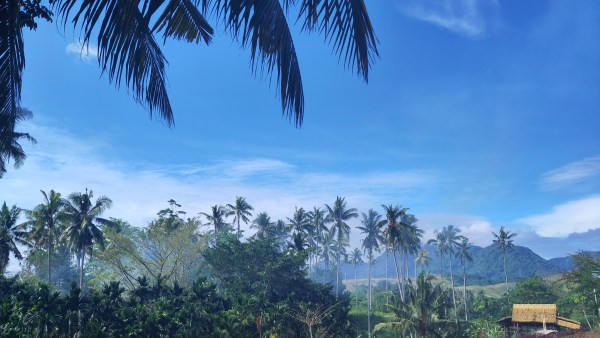
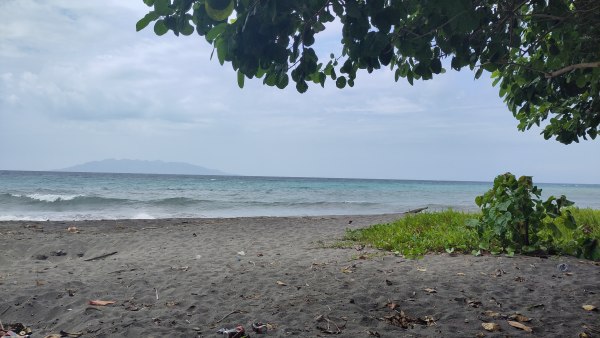
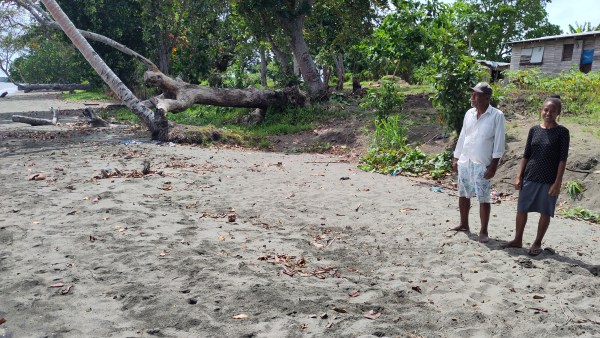
One of the most moving encounters in my time in Melanesia was with George. He moved to his village when he was a child from his home island of Sikaiana, which is about 100 miles out into the Pacific. He showed me a tree on the shoreline where he prays every day, but because of Climate Change the tree is threatened by the rising sea levels and he said to me “if the tree falls I will too”. His community only has about 10 years left before their village will be washed away by the sea.

He landed here when he was only eight
Crossed a hundred miles of ocean on the way
Left his island and his heart to make a brand new start
In this strange and unfamiliar place

When he left his boat he sat under a tree
It was only small, like him, but he could see
The horizon far away and he knew beyond it lay
His home, his heart, his history

And the tree grew bigger as the years passed by
And he built a life here under strange new skies
But the tree was watered by the tears he’d cry
For his far off far off home

He watched with pride as all his children grew
And then he watched his grandchildren too
As they laid down their roots And started to bear fruit
In the only place they ever knew

His tree became a refuge for his soul
His confidante, his muse, his hiding hole
He would visit every day to sit, and watch, and pray
To restore his heart and be made whole

And the tree grew bigger as the years passed by
And he built a life here under strange new skies
But the tree was watered by the tears he’d cry
For his far off far off home

One day while he was walking to the shore
It seemed a little closer than before
As slowly day by day the land was washed away
And his tree wasn’t safe there anymore

For the second time in his life he knew
What this meant and what they’d have to do
It was time to move on before his tree was gone
Because if it fell he knew that he would too

And so the tree grew smaller as they sailed away
In search of a new life and a brighter day
But the tears feel freely as he bid goodbye
To his far off far off home

(c) Rich Clarkson 2025

Summertime: A Crown of Sonnets

A Crown of Sonnets is a sequence of fifteen poems where the last line of each becomes the first line of the next, with the final poem consisting of the first line of each sonnet in turn. These sonnets are a sort of theme and variation, all picking up on ideas of what is seen and unseen, known and unknown, visible and hidden. The initial inspiration came from reading the novel What We Can Know by Ian McEwan, which is about a Crown of Sonnets that is lost and passes into legend. Reading this book while camping in the Forest of Dean and watching the solar eclipse of 2026 provided the spark for the following work.

~ ~ ~ ~ ~

I – Stars
We lie out on the grass beneath the stars,
Clinging tightly as the planet spins.
Below, the porous sky offers (at last)
a respite from the heat. Above, our skin
is prickled with the residue of day-
time’s jollities, vacation’s dusty sheen
that lingers long beyond the act of play,
and fills the heart with treasures pure and clean.
Darkness deepens. Galaxies emerge.
First distant pinpricks then, with time, our own,
as you, and I, and air, and grass converge –
minuscule beneath this vast unknown.
Yet, as we watch, the vastness shrinks, ’till now
the plough is buried handle deep in cloud.

II – Plough
The plough is buried handle deep. In cloud
of thought I absent mindedly attempt
to raise its rusted frame but it has vowed,
like Arthur’s fabled sword, it will prevent
my hollow efforts. I move down the lane
towards the holy place where I am staying –
humility where opulence once reigned,
I join St Francis’ brothers in their praying.
This is my first time here among these men
and yet their words rest easy on my tongue.
They resonate with all those past Amens
in many places – local and far flung –
that give shape to the world and now transfigure
time, and all that ought to feel familiar.

III – Eclipse
All that ought to feel familiar
is turned upon its head as, in the sky,
the sun begins to darken, there’s a chill here –
unseasonal, perhaps, but not surprising.
The daytime moon has turned her back – her gaze,
like ours, is focused wholly on the sun
and, as she slowly blocks our view, today’s
eclipse is safely stored for years to come
in memories and photo reels. And yet
what makes this moment memorable, it seems,
is not what we can see, that coronet
of light, but rather what becomes unseen.
Our brightest, closest star, that shines so proud
is, as we watch, concealed within its shroud.

IV – Truth
While we watch, concealed within its shroud,
the truth is in a battle for its soul.
As quiet, hard won expertise is drowned
by louder voices shouting for control,
and slow, reflective honesty is left
behind by endless novelty that cares
for little but its own relentless theft
of real life in pursuit of likes and shares.
If you don’t like the facts then choose your own!
If history’s unhelpful just forget!
If you prefer your evidence homegrown
then that’s ok, it’s up to you! And yet,
while we debate the truth’s right to existence,
wildfire smoke is rising in the distance.

V – Smoke
The wildfire smoke is rising in the distance,
shadowing the corners of the mind
and voicing with liturgical insistence
its litany, blood red on the horizon.
The buzzards circle watchfully above us,
the jackdaws vesper in the library’s eaves
as this day’s long lament joins countless others
blanketing the earth like Autumn leaves.
The wizened, fearful trees waiting their blazing,
The drought-scoured land dismantled by a gust,
bear sacramental witness to our cravings
and remind us that we too are ash and dust.
Can we avert our eyes from nature’s glare
as the gravity of grief hangs in the air?

VI – Robin
The gravity of grief hangs in the air,
the gathered few stand quietly around
listening as the usual time-worn prayers
accompany her journey to the ground.
Eyes, reddened by the memory of absence,
are caught by movement in a nearby tree –
a flickering of bloodshot feathers, dancing
with spirit-filled abandonment. This free
display of joy brings smiles to sorrowed faces
and hope to hearts held captive by distress.
In Heaven’s great economy of graces
the Robin – comforter-in-chief – is blessed.
When grief’s deep darkness threatens to eclipse us,
to lift our eyes beyond is our resistance.

VII – Beyond
To lift our eyes beyond is our resistance.
To shine more brightly when the shadows swell.
To face up to injustice with persistence.
To do the small things and to do them well.
To seek the sacred image in a stranger.
To hold the weary silence of a friend.
To reach across divides despite the danger.
To set off without knowing how it ends.
To paint a picture for a loved one’s pleasure.
To write a poem for your own delight.
To make the world more beautiful is treasure
that lifts our eyes beyond the darkest night
and helps us see through others eyes and cares,
reminding us of all that we still share.

VIII – Candle
Reminding us of all that we still share,
a single candle flickers by the wall
lit by an unknown hand. The dampening air
of early Autumn rises and then falls
around its brittle warmth. I wonder who
entered this ancient place today and why?
What sorrow, anxiousness, or gratitude
led them to leave behind this guttering light?
And where did they go next? What did they face
beyond those wooden doors? I hope they found
what they were looking for, the strength, the grace
to carry them beyond this holy ground.
What we hold in the light can be endured,
but what is lost, in memory is obscured.

IX – Forgotten
What is lost in memory – obscured
by time’s incessant impetus that winds
the present, past, and future up in cords
of gossamer and starlight, holding minds
in captive thrall to those few winding threads
that steal the right to tell us how things are,
discarding all those footnotes left unsaid
for so long that they cease to be regarded –
is there beneath the pelt of what’s remembered,
another world still hidden in plain sight,
a story told in buried charcoal embers,
in standing stones and constellations light-
years wide, in Grey Hair-Grass and Sphagnum Mosses,
in local place names etched into our maps,
it’s shrouded in obscure lexical glosses
and chanted over skipping ropes and claps,
truths that weave through earth’s long tapestry
beyond all that our fleeting eyes can see.

X – Lighthouse
Beyond all that our fleeting eyes can see
the distant lighthouse watches from its cliff,
standing firm against the trickery,
the shifting, metamorphic lies, where rifts
and outcrops rise and fall, where dangers lurk
for vessels passing through those Scyllan straits
and as each ship arrives it gets to work,
illumining the dangers that await
while we, in landlocked safety, pay no mind
to those far fractile edges of the land,
their wild igneous columns and skewed lines
of sedimental strata. Understand
that what we do not see, what we ignore
is, even now, the rock that keeps us moored.

XI – Lithos
Even now, the rock that keeps us moored
is lying where an angry Giant threw it.
The Lightning Stone (of this we are assured
by local legend so we know it’s true) sits
mossed and mottled deep within the woods
like some great Incan artefact. The trees
have cloaked it all around with ligneous hood,
while passers by pass by and do not see.
And yet this boulder (so the story goes)
is all that holds together earth and sky:
The light shines in the undergrowth, and so
the winter’s creeping darkness is defied.
Such forgotten tales can surely be
the hope that binds us to reality.

XII – Reality
The hope that binds us to reality
is found in the most ordinary places.
In craggy-raftered pubs and rickety
old village halls, community centre basements,
back room cafés, steam train-sooted churches,
beneath the flickering fluorescent lights
of tower blocks, on huddled up park benches,
in any place where people still delight
in meeting up together. This is what
is real, not artificial, not a trace
of algorithmic pressure, just a spot
where two or three are gathered face to face.
Side by side we breathe night’s hope-filled air
while we gaze on galaxies afar.

XIII – Galaxies
As we gaze on galaxies afar,
their light falling like drifts of Easter snow
upon our waiting retinas, we are
time travellers, adventurers. We go
a hundred thousand years or more beyond
the reach of our quotidian demands,
leaving present cares behind, absconding
from this little world. There’s something grand
in stepping in the blinking of an eye
into the distant past, to be the end,
the terminus, of a photon’s epic flight
across the universe. So we attend
with care to heaven’s fragile falling shards,
our hearts still gladdened by the shooting stars.

XIV – Statue
Hearts still gladdened by the shooting stars,
hand in hand we set off past the tents –
our temporary lodgings – past the cars,
past outlawed barbeques emitting scents
of now forbidden charcoal, through the gate
past dog bags hanging like some gruesome warning
to those who enter here, beneath the great
tall pines, past bracken stretching in the morning
mist, down to the statue where we gather
for one last photograph before we go
our separate ways, one final game together,
and then the holiday is done. We know
one day we will look back on precious hours
when we lay on the grass beneath the stars.

XV – Occlusion
We lie out on the grass beneath the stars –
The plough is buried handle deep in cloud
and all that ought to feel familiar
is, as we watch, concealed within its shroud.
The wildfire smoke is rising in the distance,
The gravity of grief hangs in the air.
To lift our eyes beyond is our resistance,
Reminding us of all that we still share.
Yet what is lost, in memory obscured,
beyond all that our fleeting eyes can see
is, even now, the rock that keeps us moored,
The hope that binds us to reality.
And so we gaze on galaxies afar,
Our hearts still gladdened by the shooting stars.

(c) Rich Clarkson 2026

Photo by Abhishek Koli on Unsplash
Maple Tree

I’ve been at a conference with the Society for Liturgical Study this week, and I wrote this poem on the final day to sum up some of what we had been thinking about over the week.

~~~~~

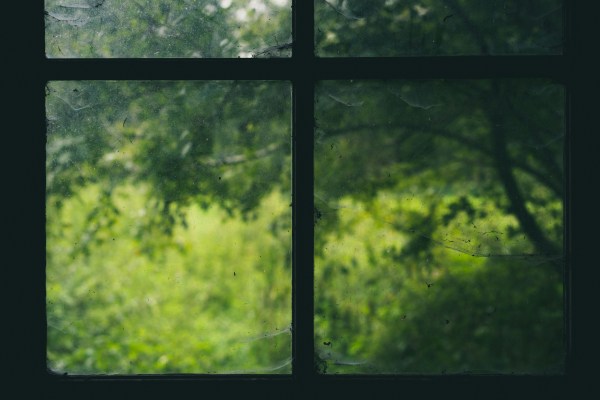
The maple tree, through open window, listens
as we inside delve deeply into all
that happens when our worshipping traditions
are woven through the crises that befall
the natural world, our planet, God’s creation.
We weigh up and discuss what it might mean
to worship in lament and jubilation
in partnership with life, seen and unseen.
We study and explore our rites and rituals,
Ponder the circularity of time,
Critique our prayerbooks, liturgies and missals
and contemplate the places where they rhyme.
And all the while, outside the window, swaying
gently in the breeze our Sister Maple Tree is praying.

© Rich Clarkson 2026

Photo by Ehud Neuhaus on Unsplash

Otter, Other.

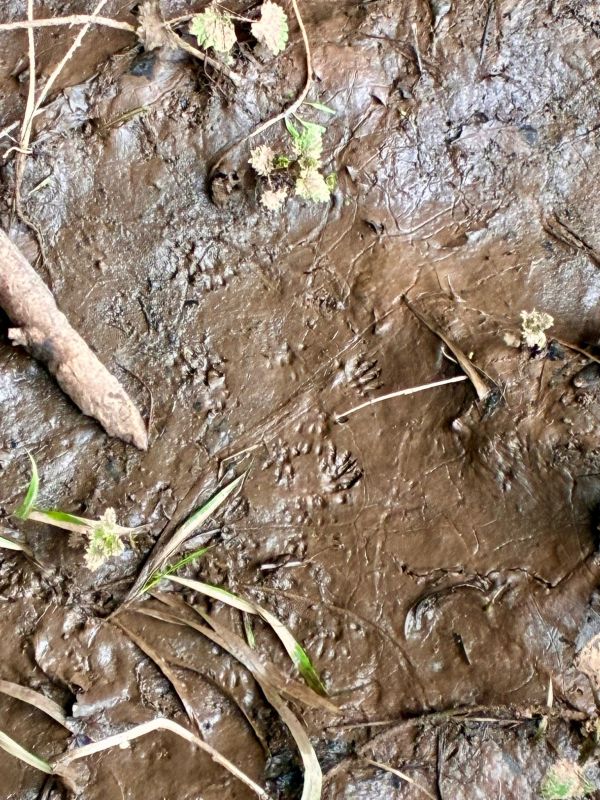
I saw a shadow in the rippling water,
a darkening of already darkened flow.
Beneath the bridge, like fabled troll, I caught a
glimpse of muscled tail – a glancing blow
upon the river surface was sufficient
to send her soaring swiftly to the depths,
and yet in that brief flash of recognition
came certainty she could be nothing else.
I stood and watched, expectant, as the current
hurried past the spot where she had been,
but, despite my lingering gaze, the torrent
scrubbed the channel’s wild remembrance clean.
At last my eye was caught by more prosaic duck and drake,
leaving Otter, utterly Other, hidden in their wake.

(c) Rich Clarkson 2026

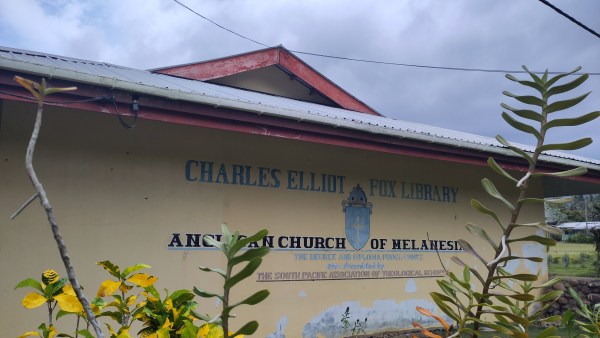
A Conversation Outside the Charles Elliot Fox Library at Kohimarama

Another poem inspired by my recent visit to the Anglican Church of Melanesia. This is based on a conversation I had with a student at the Bishop Patteson Theological College outside their college library.

“The birds around here speak sometimes”, he said,
“the smallish brown ones with the yellow eyes.
You have to pay attention though, they spread
their mottled wings, glance back, say their goodbyes
and then before you know it they have gone,
packed up their conversation and moved on.”

“We used to have a chaplain here,” he said,
“who was well known for talking to the birds
and other creatures.  Once the rats all fled
from the cassava patch at just a word
from Brother Fox.  His grave is over there.
It’s said the birds still join with him in prayer.”

I tried to pay attention like he said,
but though I watched and listened for a week,
I talked to them, sang songs, and shared my bread,
I never once did hear the Myna speak.
Beside the Charles Fox library, filled with words,
I sit in silence, praying with the birds.

(c) Rich Clarkson, 2025

Vulnerable

I visited the Anglican Church of Melanesia this September, in part to see first hand the impacts of Climate Change in the Pacific. I was struck by how tangible those impacts are and the real sense of vulnerability in these island nations. However I was also struck by the sense that though these islands may be vulnerable, they are not powerless. I wrote this poem to express some of that.

There is a vulnerability in these
small Islands where the challenges they face
are mostly not of their own making.  Seas
are rising, trees are being felled, the race
for land and for development is fierce –
their magnitude could flood the roads with tears.
But vulnerable does not mean powerless.
Developing does not mean uninformed.
These islands, villages, and towns are getting
ready now to face the gathering storm.
Stone by stone, day by day, resisting
those forces that would stop them from existing.
Here, where land and sea are in a battle aeons long,
a fragile hope against all odds has always been their song.

(c) Rich Clarkson 2025

Umbilical Tree

I visited the Anglican Church of Melanesia this September and as part of the visit I spoke to the students at the Bishop Patteson Theological College at Kohimarama. This is a poetic description of part of that deeply moving conversation.

I
There is a small Pacific Island where
when a child is born they cut the cord
and plant it in the ground with a new tree
so that, however far away they sail,
they will forever be linked with their home.

II
I met a man today, a priest, who knows
the place where his umbilical tree is growing.
It is a source of life and strength to him,
a tangible connection to the earth,
to God’s creation, to his ancestral home.

III
That cord was severed many years before,
but now he fears it will be cut again
and this time he’s not sure if he’ll survive
the separation from his source of life.

IV
His island home is being washed away
and with it goes a part of who he is,
while we sit by and watch – or worse, do not.
We are presiding over his destruction.

V
I looked him in the eye then turned away
in sorrow and in shame for what we’ve done,
yet still he greeted me as his own brother,
a fellow child of God and, trembling, I
returned his gaze once more and said “I’m sorry
for all that we have done to you my friend”.

VI
Our actions or complacency are not
without their consequences in this world
but every day we have to make the choice:
Do we give life and seek forgiveness, or
do we keep cutting that life-giving cord?

(c) Rich Clarkson 2025

Brisbane Cathedral

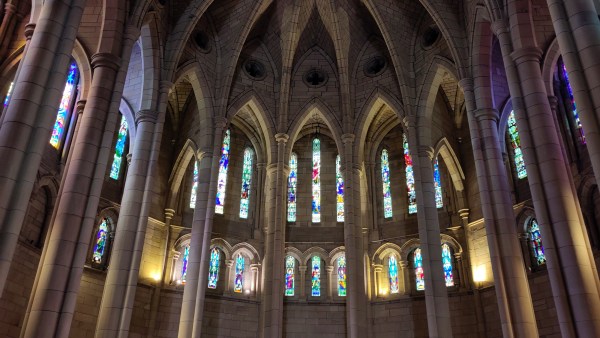
I visited the Anglican Church of Melanesia this September, and on the way spent a day in Brisbane acclimatising. I wrote this poem after visiting the Cathedral.

I wander, tired and worn, in search of silence,
a refuge from these jetlag laden days,
but Miner Birds and traffic horns and sirens
and the busy city sounds get in the way.
The doors to the cathedral all stand open
and, with relief, I gently enter in.
Though if it was for quiet I was hoping,
even here I’m followed by the city’s din.
Frustrated by this, prayer feels hard to come by
then slowly something changes as I see
the noise of vehicles, voices, planes and drums might
be exactly where they’re meant to be.
Drawn through open doors into this haven,
the city, and I, are lifted up to heaven.

(c) Rich Clarkson 2025

Stars

New Song: Stars
This was inspired by a line from Shakespeare that goes
“At first I did adore a twinkling star
But now I worship a celestial sun”

Once I loved a star so distant in the sky
Delicate and far away, so far away that I
Could never reach her
I lost my heart to some celestial creature

Once I loved a bird so high up in the air
Never was a word between us ever really shared
But I could hear her
I lost my heart just trying to get near her

Once I loved a star, a bird, an ocean and a flower
The wonders of the universe so far beyond my power
They stole my heart and kept it safe
until the day when she would give it back to me
Well I wasn’t ready then but now I am and now I know
That reaching out in love is how our hearts begin to grow
And somewhere in the waiting and the wondering
Love will come to you

Once I loved the sea so bountiful and deep
Vast and wild and free I could not ever truly keep
Her or her treasure
I lost my heart in depths I could not measure

Once I loved a flower blooming in a field
I gazed at her for hours but her secrets remained sealed
I could know know her
I lost my heart endeavouring to grow her

Chorus

Once I loved a girl so beautiful and fair
Her voice was like a bird and she had flowers in her hair
Her eyes were starlight
She swept me off my feet like waves at twilight

Now I love a star, a bird, an ocean and a flower
The wonders of the universe so far beyond my power
She stole my heart and kept it safe
until the day when she will give it back to me
Well I wasn’t ready then but now I am and now I know
That reaching out in love is how our hearts begin to grow
And one day when the stars align and constellations roar
And the ocean breakers lay their treasures gently on the shore
And the flowers bloom and bird song rises sweeter than before
Love will come to you

(c) 2025 Rich Clarkson

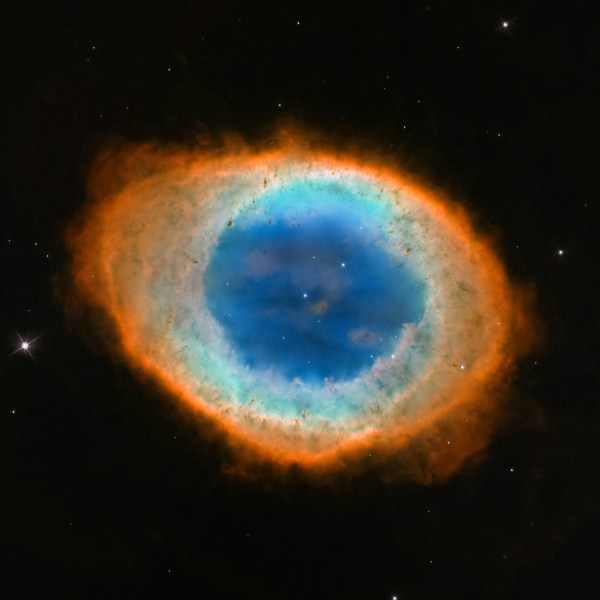
Photo by NASA Hubble Space Telescope on Unsplash

Old Trafford in the Rain (Wisden Writing Competition entry)

I entered this into the Wisden Cricket Writing Competition which at this stage feels like the only way I’m going to get my name into those hallowed pages!

Old Trafford In The Rain

There’s something very right about the scene.
A fond familiarity that’s borne
of annual pilgrimage.

My first memory of visiting Old Trafford is drowned out by the noise of the old train line and the disappointment of an early Kevin Pietersen wicket at the hands of Umar Gul. We switched allegiances to Trent Bridge for a few years after that, then to Edgbaston for convenience sake, but eventually we were drawn back to the North West and a newly rotated ground which sat under the same heavy Lancastrian skies.

The grass, so green,
still somehow shines in spite of clouds whose mournful
tears are powerless to wash away
the hope, the faith, we’ll get to see some play.

As the train pulls into the station the news ripples down the carriage. Phones emerge and the mood turns from anticipation to confusion to anger. They’ve pulled out of the match. Covid in the team camp. The game’s off. After the turmoil of the past year and a half, this was supposed to be a return to normality, familiarity, but the pandemic wasn’t done dashing our hopes just yet. A gloomy coffee in a Manchester station café as the reality sinks in. We won’t see any cricket today.

A pair of wagtails dance across the lea
their piebald pattern drawing watchful eyes
as they make their inspection, then they flee
their counterparts – same colours, different size.

We sat half way up the vast temporary stand as Eoin Morgan thrashed the Afghanistan bowlers into the crowd a record number of times, driving his team towards that famous Sunday afternoon at Lords. As entertaining as it was, I didn’t notice the birds that day, and I found myself missing the slower rhythms of Test Cricket. We sat in almost the same seats a few years later as Zac Crawley took on the Australians in much the same way. The Wagtails kept a watchful distance this time, as the colour of the ball made little difference to the pace of the game.

The umpires strut across the field, we wait
for news of their decision and our fate.

I arrive early, and take my seat clad in full waterproofs. The rain is still falling but the outfield is awash with activity. The pigeons eat their fill on the summer-worn pitches. Dad messages to say his train is delayed. So is the match, I reply, then I sit, and I wait, and I watch. The old desert monks of the 4th century had a word for this – Prosoche, the art of attention. They’d have enjoyed Test Cricket. The clock ticks slowly on, and as we sit quietly together my mind is filled with recollections of past glories and frustrations here. Eventually, well into the afternoon, the umpire calls play, and this match joins the others in my memory of this sacred place.

Old Trafford in the rain. My dad and me.
There’s truly nowhere else I’d rather be

(Rich Clarkson, October 2024)

After Wordsworth

This was written for the Daffodil Days weekend at St Peter’s, Kinver

I wait, as patient as the laden clouds
that drift on by towards the distant hills.
They journey high above the furrowed brow
of fresh ploughed field, bearing their burden still.
I wait, as patient as the quiet grass
that, clinging tightly to the hardening earth,
longs for the star-chilled wintertime to pass
and all the warming sun may bring to birth.
I wait, as patient as the ancient stones
now settled gently in this once strange land.
though filled with rage a thousand storms have blown
they – weathered, prayer-soaked, resolute – still stand.
I wait, patience rewarded with the thrill
of seeing Spring bring forth a host of golden daffodils.

Photo by Aaron Burden on Unsplash

King of the Acorns

The title of this song, “King of the Acorns”, sat on my notes app on my phone for about 2 years before I finally turned it into a song – I hope it was worth the wait!

Scratch beneath the surface of the earth
It’s his domain that’s he’s claimed
And he returns to it again and again and again
His hidden treasure hoard, safely stored
In woods and in parks
and as the dark winter hardens
The gardens he leaves his mark

He’s the king of the acorns, the king of the trees
The king of the soil and the soul of the seeds
He’s the king of the autumn, king of the spring
King of whatever the winter may bring
He’s the king of the garden, king of the park
King of the dawn and the dusk and the dark
And the light and the day and the night
It’s all his by right
He’s the king of the acorns

Looking down from on high
As the sky collides with the ground
His hide and seek quarry is found
With the instincts of a bloodhound
He knows his labours through the year
Are hidden here and he must clear it all
Before it disappears like morning mist
and schoolboy fears

He’s the king of the acorns…

(c) Rich Clarkson 2025

Photo by Gary Fultz on unsplash.com

Blog at WordPress.com.

Up ↑