The Ballad of Tetete Ni Kolivuti

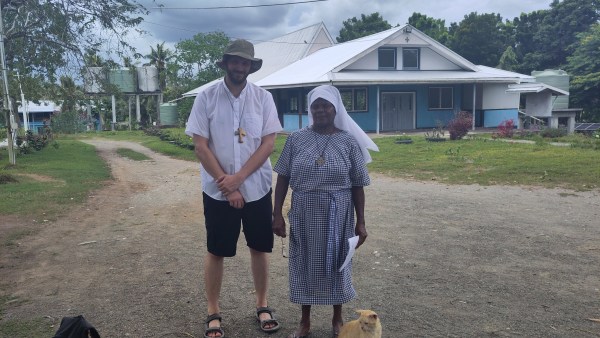
Tetete Ni Kolivuti (which means ‘hill of prayer’) is the headquarters of the Community of the Sisters of the Church in Solomon Islands. I visited TNK back in September and this is a little ballad about this wonderful place.

The soldiers arrived in ’42
With their guns and their packs and their marching boots too
They unloaded their ships and they made their way through
In search of a place to call home
They built a new hill on a flat piece of ground
Cleared the coconut trees from the bush all around
Made a fortified lookout on top of the mound
At Tetete ni Leleu – the Hill of War

The sisters arrived in 71,
The trees had returned now the soldiers had gone
They faithfully followed as God led them on
In search of a place to call home
They built their first chapel up on the hill there
The community grew as together they shared
what little they had with compassion and care
At Tetete ni Kolivuti – the Hill of Prayer

The flood waters rose in ’23
Submerging the land all the way to the sea
And the people all round had to climb up the trees
In search of a place to call home
The hill was an island for several days
Like Noah and Jonah the sisters all prayed
In the swirling of waters as together they stayed
At Tetete lia Kokomu – the Island Hill

For nearly a century the hill has stood
Through war and disaster, through wildfire and flood
As a beacon of light and a wellspring of good
Tetete Ni Kolivuti
This community of sisters still hold on to the spark
in this hill which has been an island, a refuge, an ark,
In a turbulent world where so much is dark
From the hill of war came the hill of prayer
The island hill is still standing there
Tetete Ni Kolivuti (the Hill of Prayer)

(c) Rich Clarkson 2025

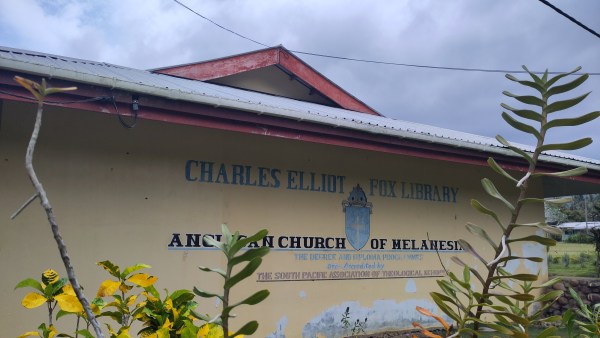
A Conversation Outside the Charles Elliot Fox Library at Kohimarama

Another poem inspired by my recent visit to the Anglican Church of Melanesia. This is based on a conversation I had with a student at the Bishop Patteson Theological College outside their college library.

“The birds around here speak sometimes”, he said,
“the smallish brown ones with the yellow eyes.
You have to pay attention though, they spread
their mottled wings, glance back, say their goodbyes
and then before you know it they have gone,
packed up their conversation and moved on.”

“We used to have a bishop here,” he said,
“who was well known for talking to the birds
and other creatures.  Once the rats all fled
from the cassava patch at just a word
from Bishop Fox.  His grave is over there.
It’s said the birds still join with him in prayer.”

I tried to pay attention like he said,
but though I watched and listened for a week,
I talked to them, sang songs, and shared my bread,
I never once did hear the Myna speak.
Beside the Charles Fox library, filled with words,
I sit in silence, praying with the birds.

(c) Rich Clarkson, 2025

Vulnerable

I visited the Anglican Church of Melanesia this September, in part to see first hand the impacts of Climate Change in the Pacific. I was struck by how tangible those impacts are and the real sense of vulnerability in these island nations. However I was also struck by the sense that though these islands may be vulnerable, they are not powerless. I wrote this poem to express some of that.

There is a vulnerability in these
small Islands where the challenges they face
are mostly not of their own making.  Seas
are rising, trees are being felled, the race
for land and for development is fierce –
their magnitude could flood the roads with tears.
But vulnerable does not mean powerless.
Developing does not mean uninformed.
These islands, villages, and towns are getting
ready now to face the gathering storm.
Stone by stone, day by day, resisting
those forces that would stop them from existing.
Here, where land and sea are in a battle aeons long,
a fragile hope against all odds has always been their song.

(c) Rich Clarkson 2025

Parallels

I visited the Anglican Church of Melanesia this September, and while there were a lot of differences between life there and in England, I wrote this poem reflecting on some of the similarities

A mother anxiously comforts her baby
An old man groans as he sits on a chair
Children giggle as they enter the classroom
People are people everywhere

Schools that don’t have enough equipment
Farms that struggle for lack of rain
Big corporations that do what they want to
Ten thousand miles, and still the same

Birds sing out as the sun is rising
Stars shine brightly through gaps in the clouds
A cool breeze blows through an open window
At home or away these blessings are found

A helping hand from a kindly stranger
A wordless grin in a crowded hall
A moment of laughter that transcends language
The world is not so big after all

(c) Rich Clarkson 2025

Umbilical Tree

I visited the Anglican Church of Melanesia this September and as part of the visit I spoke to the students at the Bishop Patteson Theological College at Kohimarama. This is a poetic description of part of that deeply moving conversation.

I
There is a small Pacific Island where
when a child is born they cut the cord
and plant it in the ground with a new tree
so that, however far away they sail,
they will forever be linked with their home.

II
I met a man today, a priest, who knows
the place where his umbilical tree is growing.
It is a source of life and strength to him,
a tangible connection to the earth,
to God’s creation, to his ancestral home.

III
That cord was severed many years before,
but now he fears it will be cut again
and this time he’s not sure if he’ll survive
the separation from his source of life.

IV
His island home is being washed away
and with it goes a part of who he is,
while we sit by and watch – or worse, do not.
We are presiding over his destruction.

V
I looked him in the eye then turned away
in sorrow and in shame for what we’ve done,
yet still he greeted me as his own brother,
a fellow child of God and, trembling, I
returned his gaze once more and said “I’m sorry
for all that we have done to you my friend”.

VI
Our actions or complacency are not
without their consequences in this world
but every day we have to make the choice:
Do we give life and seek forgiveness, or
do we keep cutting that life-giving cord?

(c) Rich Clarkson 2025

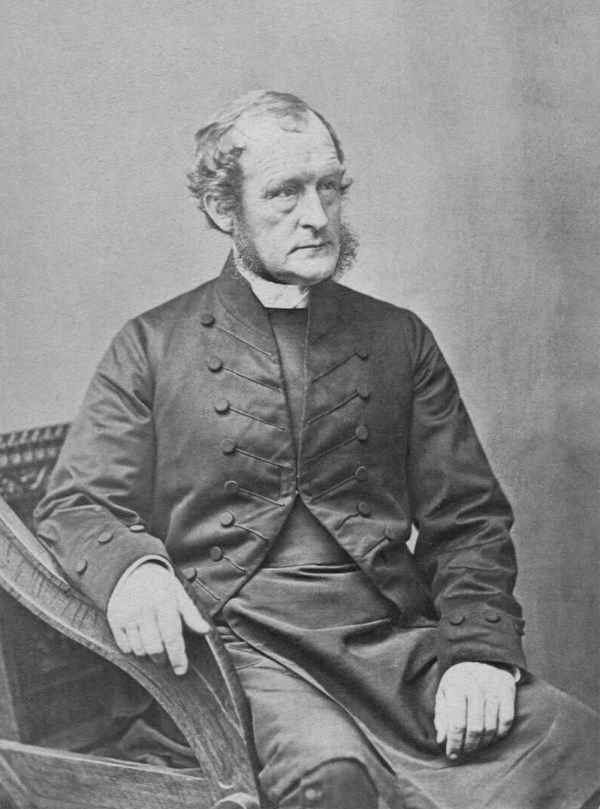
George Augustus Selwyn

I visited the Anglican Church of Melanesia this September at the invitation of the Bishop of Lichfield, whose predecessor – George Augustus Selwyn – was the first Bishop of New Zealand (which included Melanesia) then came back to be Bishop of Lichfield. I wrote this poem to tell a bit of his story.

In 1841 George Selwyn sailed
to Aukland as a Missionary Bishop.
But on arrival found that it entailed
(due to an administrative mishap)
not just the many islands of New Zealand
but somehow all of Melanesia too!
He set out on a ship to go and see them
with local guides to help him and his crew.
Five times he sailed around these happy isles
and gave to them a Bishop of their own
then, after thirty years of joys and trials,
in Lichfield Bishop Selwyn was enthroned.
His ministry set deep roots and encouraged
the Melanesian people’s faith to flourish.

(c) Rich Clarkson 2025

Blog at WordPress.com.

Up ↑